

by P.D. Lesko
Laura Beny, a single mom and a tenured University of Michigan Law School professor, has asked the Supreme Court to hear her case against the University of Michigan in which she alleges racial and gender discrimination. In her suit Beny alleges the defendants, which include the University of Michigan, the University of Michigan Law School and Mark West, former dean of the Law School, violated Beny’s Title I, Title VI, Title VII and Title IX civil rights. The suit also alleges the Defendants violated Beny’s First, Fifth and Fourteenth Amendment rights. Beny’s suit has twice been dismissed at the federal level and she recently asked the U.S. Supreme Court to hear the matter.
Beny’s original lawsuit was filed in 2022 in the U.S. District Court for the Eastern District of Michigan, and Beny was represented by the Detroit law firm of Edward Jennings.
Beny’s lawsuit states that she was hired in 2003 and became the second African American female tenure-track professor in the Law School’s history. In 2018, she received a disciplinary notice for disruptive conduct and in 2019 received another notice for verbal abuse. In 2022, Beny was disciplined for a third time, including having her pay frozen. It was because of this third disciplinary action against her that Beny sued.
Beny’s Discrimination Suit Dismissed
Beny’s 2022 suit was subsequently dismissed by U.S. District Court for the Eastern District of Michigan. In the District Court’s opinion the Honorable David M. Lawson writes, “They [Defendants] acknowledge that they have imposed employment-related discipline upon Beny, but they argue, among other things, that Beny’s own blatantly unprofessional conduct is the only reason for their actions. Because Beny has not produced evidence that the defendants’ actions were a pretext for unlawful discrimination or retaliation, she is not able to demonstrate that a fact issue remains for trial on any of her claims. The motion for summary judgment will be granted.”
Beny’s filing in the U.S. District Court for the Eastern District of Michigan included emails from Mark West, then Asso. Dean of the Law School, beginning in 2008 (five years after Beny was hired) which Beny alleges were discriminatory and harassing:
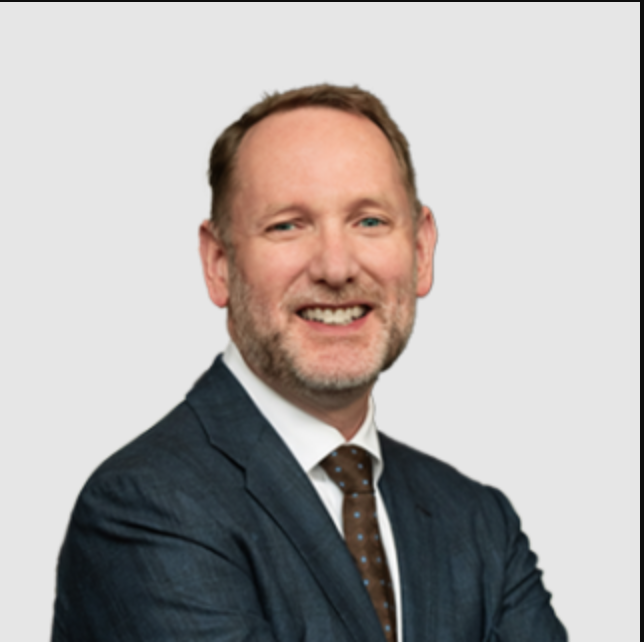
“In January 2010, Defendant West stated in an email to Plaintiff that he would put the picture of her infant daughter on his desk and tell everyone it was his child. ‘I’m going to put the picture on my desk and tell everyone it’s mine.'”
“Associate Dean West also gave Plaintiff the following unsolicited advice about taking care of a female infant: ‘For a girl; front to back. Boys are easier.'”
“Dean West, the Associate Dean, wrote an email to Plaintiff, dated December 16, 2010, that stated:
‘People are persecuting me because of your beauty. Make them STOP!! The people down in communications are all over my ass trying to get me to cajole you into finding time for a photoshoot. I said hay lay off of Laura she is fucking awesome, they said they still need your picture even if you are fucking awesome. I thought maybe they could use another picture, but man other pictures do not do you justice. I am considering substituting a picture of Andrei Shleifer [Plaintiff’s Ph.D. advisor at Harvard]. I will not grovel to you again. Your humble minion, Mark XOXOXO.'”
District Court Judge David M. Lawson stated in his opinion that West’s emails were “immature, awkward, and unprofessional, but likely not harassing.”
The District Court opinion also included information about Beny’s actions that resulted in her being thrice disciplined:
“In approximately 2018, Beny’s time at the University began to be marked by contention. In April of that year, University students organized an international academic conference, but Beny had heard that organizers did not invite presenters in a manner that would ensure diversity. When the students did not respond to an email Beny sent them expressing her concerns about the selection process, she decided to speak out at the conference. Although she was not invited to speak, she attended the conference. After West concluded his opening remarks, she asked if he would take questions.
“When he declined, she approached the podium and began to speak in front of the attendees, identifying herself as a tenured professor, prominent scholar, taxpayer, and American citizen. She stated that the law school had tried to sabotage one of her courses and noted that the conference organizers were perpetuating inequities. When a woman got up and walked towards the front of the room, appearing as if she was on a phone call, Beny accused her of calling the police and urged her to go ahead. When one of the students stood up and asked her to stop speaking, she asked him what country he was from.”
In 2019, Beny began to complain about the alleged racial and sexual harassment she experienced to upper-level university officials. Her lawsuit states that in 2019 “Plaintiff informed Provost Martin Philbert via email of the discrimination, disparate treatment, hostile work environment and retaliation she was experiencing compared to white male professors. In 2022, Plaintiff Beny wrote to interim Provost Susan Collins regarding the discrimination, disparate treatment, hostile work environment and retaliation she was experiencing and requested a meeting with her. She was not afforded a meeting.”
In Jan. 2020, Martin Philbert was placed on leave by the Univ. of Michigan following multiple allegations of sexual misconduct. In Mar. 2020, Philbert was fired from his executive position and banned from campus. In June 2020, Philbert submitted his “voluntary and irrevocable retirement” and surrendered his rights to academic tenure in a letter to President Mark Schlissel dated June 7. In Jan. 2022, Univ. of Michigan President Mark Schlissel was fired by the Regents of the University. Schlissel was removed due to an inappropriate relationship with a university employee.
Beny Appeals to the Sixth Circuit
Beny appealed the dismissal of her lawsuit to the Sixth Circuit U.S. Court of Appeals. The Sixth Circuit opinion states Beny was issued her third notice of disciplinary action on March 31, 2022, the sanctions from which are the subject of her lawsuit. That court affirmed the lower court’s decision in July 2025. The ruling of the Sixth Circuit states, “Beny says that from 2014 to 2016, she tried to bring attention to what she saw as ‘inequities at the law school.'”
While Beny’s Complaint focuses on alleged harassment and inequitable treatment, the Sixth Circuit’s ruling (like the lower court’s ruling) includes what the federal judges write were Beny’s “threats and personal attacks” aimed at Law School administrators and her faculty colleagues:
“Meanwhile, Beny began to send dozens of personal attacks to individual members of the Law School faculty, some of which resulted in faculty to recommend that ‘law enforcement be enlisted to conduct a threat assessment.’ On February 24, 2022, for example, Professor Alicia Davis, who is African American, reported to West that Beny telephoned her. Describing the call as ‘incredibly disturbing,’ Davis reported that Beny said to her, among other things, ‘what evil, Satanic motive drives you?’ Following the call,Beny texted Davis, ‘God will deal with you.'”
“Beny also threatened the faculty member who was serving as the replacement instructor for her course. ‘If you don’t give me access to the course materials I created, you will be dragged into my lawyers [sic] investigation and EEOC complaint.’ In another email, she accused the replacement instructor of being a ‘racist’ and a ‘coward’ because he reported her earlier threat to administrators.”
Beny Fails to Provide “Pretext” (Evidence That Michigan Officials Disciplined Her For Reasons Other Than Those Stated)
The Sixth Circuit affirmed the ruling of the lower court and explained why: The University provided a legitimate reason for the disciplinary actions set out in the March 22, 2022 disciplinary notice: “[Beny’s] ‘abandonment’ of the classroom, retaliation against students who raised concerns about her course, and her troubling communications with other faculty and staff members.”
To demonstrate pretext, Beny had the burden to produce evidence from which a reasonable jury could reject the University’s explanation for why it disciplined her. The trio of Sixth Circuit judges ruled, “Beny’s argument fails because a jury could not reasonably conclude that West and other key decision makers did not honestly believe in the proffered reasons for disciplining Beny.” That Court’s opinion ends: “Nothing in the record undermines the University’s proposed connection between Beny’s performance issues and her pay or creates an issue of material fact as to whether Beny’s pay freeze was motivated by her sex.”
To ask the U.S. Supreme Court to hear an appeal, a petition for a writ of certiorari must be filed within 90 days of the lower court’s judgment. The Supreme Court then reviews the petition and decides whether to hear the appeal—this process can take several months to over a year.
Comments are closed, but trackbacks and pingbacks are open.